Best Ranch Urban Hotels United States: A Definitive Guide to Luxury Hybrid Hospitality
The American hospitality landscape has witnessed a profound structural divergence from the traditional binary of “urban luxury” versus “rural retreat.” For decades, the high-end traveler was forced to choose between the logistical convenience of a city center and the expansive, heritage-driven experience of a Western ranch. Today, a sophisticated hybrid asset class has emerged, effectively bridging this gap.
This convergence is not merely a matter of decor or “Western-themed” interior design. Rather, it is a response to a fundamental shift in the luxury consumer’s requirement for “compressed expansiveness.” The modern professional, often constrained by tight operational windows, requires the psychological benefits of a wide-open landscape without the multi-hour transit times usually associated with reaching the remote interior of the American West. These properties function as “pastoral islands” within the urban sea, leveraging sophisticated landscape architecture and strategic zoning to create a sense of isolation while remaining minutes away from high-density commerce and transit hubs.
Navigating this sector requires a departure from standard hospitality metrics. One must look beyond the thread count of the linens to evaluate the property’s “agrarian integrity”—the degree to which it actually functions as a land-based asset versus a metropolitan hotel with a rustic veneer. This audit examines the structural, economic, and operational dynamics of these hybrid venues, providing a definitive reference for those tasked with selecting accommodations that demand both high-level professional infrastructure and deep environmental immersion.
Understanding “best ranch urban hotels united states”
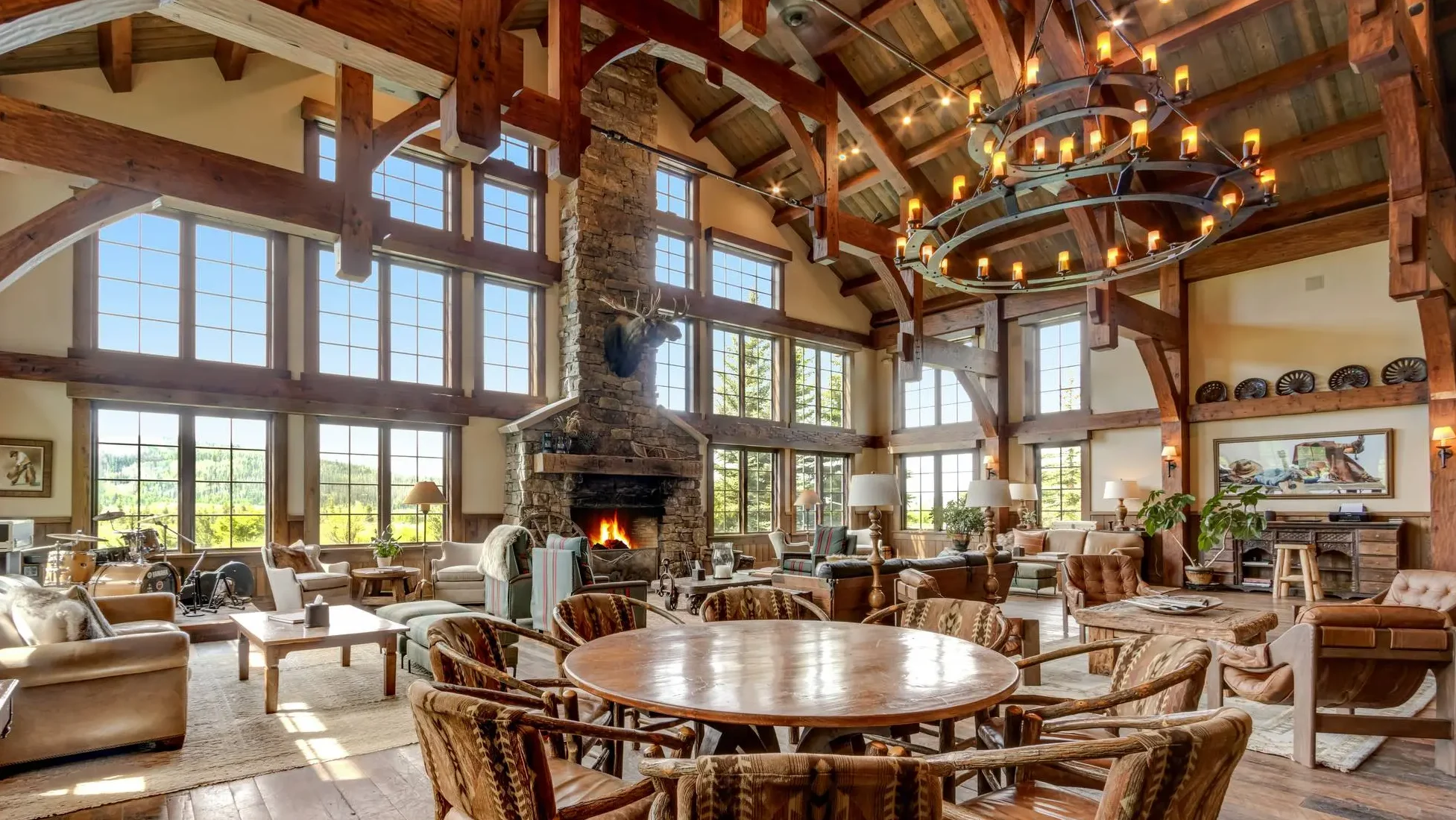
To effectively categorize the best ranch urban hotels united states, one must first deconstruct the terminology. The term “ranch” in this context refers to a specific operational philosophy centered on land stewardship, equestrian culture, and low-density architecture. The “urban” modifier indicates that these properties are situated within or adjacent to a Metropolitan Statistical Area (MSA). The tension between these two descriptors creates a unique set of challenges and opportunities for both the operator and the guest.
The primary misunderstanding among travelers—and even some hospitality analysts—is that these hotels are merely “themed” resorts. This is a hazardous oversimplification. A genuine ranch-urban hotel maintains a functional relationship with its acreage. This might manifest as on-site viticulture, sustainable livestock management, or a professional-grade equestrian facility. If the “ranch” element is purely cosmetic, the property fails the authenticity test. In contrast, the best ranch urban hotels united states integrate the surrounding topography into the guest’s daily workflow, offering “active” landscapes where the environment serves as a functional workspace for creative or strategic thinking.
Furthermore, the “best” status in this niche is defined by the “Isolation-Integration Ratio.” This metric assesses how effectively a property masks its urban proximity. A high-performing property will utilize natural berms, sound-dampening vegetation, and strategic sightlines to ensure that while a guest is on the ranch, the city is invisible. However, the moment that guest needs to reach an airport or a corporate headquarters, the transit time must be minimal. This paradoxical requirement is what separates top-tier ranch-urban assets from standard suburban resorts.
Deep Contextual Background: The Evolution of the Hybrid Ranch
The genesis of the ranch-urban hybrid can be traced to the mid-20th-century “Guest Ranches” of Arizona and California. Originally, these were working ranches that took in boarders to diversify revenue. As cities like Scottsdale, Austin, and Denver expanded, these rural outposts were slowly engulfed by the suburban fringe. Rather than selling to developers for residential subdivisions, a select group of operators realized the immense value of maintaining their agrarian footprint as a luxury amenity.
In the 21st century, this model has been refined through the lens of “Biophilic Design.” The realization that human productivity and mental health are directly linked to exposure to natural environments has turned these properties into essential infrastructure for the high-stakes professional world. We are no longer looking at “gentleman’s farms”; we are seeing the rise of sophisticated, tech-enabled estates that preserve the heritage of the American West while providing the fiber-optic speeds and concierge services expected in a Manhattan penthouse. This evolution represents a maturation of the American identity—a move toward reconciling our frontier past with our hyper-urbanized present.
Conceptual Frameworks and Mental Models
To evaluate these complex properties, analysts should utilize the following frameworks:
-
The Agrarian Buffer Model: This evaluates the physical distance and topographical barriers between the hotel rooms and the nearest urban noise or light pollution. A property with a “tight” buffer requires more sophisticated architectural intervention to maintain the ranch atmosphere.
-
The Operational Fidelity Axis: This measures the depth of the ranch programming. Does the hotel offer legitimate agricultural engagement (e.g., cattle work, regenerative farming workshops), or is the “ranching” limited to a few horses for trail rides?
-
The Transit Friction Coefficient: This calculates the true time-cost of moving between the ranch and the metropolitan core. If the traffic congestion of the city nullifies the peace of the ranch, the asset loses its primary value proposition for the corporate traveler.
Key Categories and Variations of Ranch-Urban Assets
The landscape of the best ranch urban hotels united states is diverse, ranging from historical preserves to purpose-built luxury estates.
The decision logic for the guest depends on the “Center of Gravity” of their trip. If the trip is 80% business and 20% leisure, an Equestrian Urban Estate near the airport is optimal. If the ratio is reversed, a Legacy Heritage Ranch on the far edge of the MSA provides a deeper psychological reset.
Detailed Real-World Scenarios
Scenario 1: The High-Stakes M&A Retreat
-
Constraint: A 48-hour window for sensitive negotiations requiring absolute privacy and no “lobby noise.”
-
Decision: A New-Build Luxury Enclave with detached “casitas” and high-level security protocols.
-
Failure Mode: Selecting a downtown hotel where the proximity to other firms increases the risk of being spotted, or a remote ranch that prevents a quick exit if the deal collapses.
-
Second-Order Effect: The expansive views reduce the “pressure cooker” atmosphere of the negotiation, leading to more lateral thinking and compromise.
Scenario 2: The Creative Sabbatical
-
Constraint: A writer or developer needing 14 days of “deep work” while remaining within reach of their studio.
-
Decision: A Vineyard-Ranch Hybrid that provides an agrarian rhythm (morning walks, farm-to-table meals) but maintains fiber-optic connectivity.
-
Failure Mode: Choosing a “themed” resort where the constant stream of transient tourists disrupts the quiet required for focus.
Planning, Cost, and Resource Dynamics
The economic reality of the best ranch urban hotels united states is dictated by the massive carrying cost of the land.
-
Direct Costs: Room rates are typically 30-50% higher than comparable urban luxury hotels due to the land-to-guest ratio.
-
Indirect Costs: Transportation (car rentals or private drivers are almost always required) and “on-ranch” activity fees.
-
The Land Tax: Guests are effectively paying for the “empty space” that surrounds them—the views and the silence that the city has commercialized out of existence elsewhere.
Tools, Strategies, and Support Systems
-
Topographic Mapping: Use satellite views to check for “encroachment.” A ranch that looks peaceful in photos might be backed up against a major highway or a construction site.
-
The “Horse-to-Human” Ratio: A metric for determining how focused a property is on its equestrian roots versus being a generic resort.
-
Zoning Audit: For long-term stays or corporate events, check the surrounding land. If the “neighboring ranch” has a “Coming Soon: Shopping Center” sign, your experience will be compromised.
-
Acoustic Consulting: Inquire if the hotel has used specialized glass or insulation to mitigate the “urban hum” that can plague peripheral properties.
Risk Landscape and Failure Modes
The “Hybrid Paradox” creates specific risks:
-
The Veneer Trap: The most common failure. The property looks like a ranch in marketing but feels like a Marriott once you arrive.
-
The Urban Encroachment Risk: Light pollution from the expanding city can ruin the “starry night” ranch experience.
-
Operational Inconsistency: A staff that is great at “ranching” (horses, trails) might be terrible at “urban” requirements (printing contracts, managing high-speed video calls).
Governance, Maintenance, and Long-Term Adaptation
For an organization that uses these properties as regular retreat sites, a governance checklist is essential:
-
Sustainability Monitoring: Is the ranch using regenerative practices, or is it a “water hog” in a desert environment?
-
The Privacy Filter: Does the property have a policy on NDAs and “closed-set” event areas?
-
The Layered Checklist:
-
[ ] Does the property have its own independent water source?
-
[ ] Is there a dedicated “Executive Liaison” on staff?
-
[ ] Are the animals treated with professional standards of welfare?
-
[ ] Is the “ranch” portion of the property accessible to the guest, or just for looking at?
-
Measurement, Tracking, and Evaluation
-
Leading Indicator: The “Visual Horizon Score”—how many degrees of your view are free of man-made, non-agrarian structures?
-
Lagging Indicator: The “Stress Recovery Index”—subjective feedback from guests on how quickly they felt “disconnected” from the city’s pace.
-
Documentation: Maintain a “Vibe Log” for properties. Unlike data, the atmosphere of a ranch-urban hybrid is highly subjective and can change with a new manager or neighboring development.
Common Misconceptions and Oversimplifications
-
Myth: “You have to go to Montana for a real ranch.” Correction: Some of the most sophisticated equestrian and agrarian hospitality exists within 30 miles of Dallas, Denver, and Los Angeles.
-
Myth: “Ranch hotels are just for families.” Correction: The best ranch urban hotels united states are increasingly designed for the corporate elite and the “solo deep-worker.”
-
Myth: “The food will be limited to steak and potatoes.” Correction: These properties often lead the “farm-to-table” movement, utilizing on-site gardens for Michelin-level cuisine.
-
Myth: “I can just use Uber.” Correction: Many ranch properties have long, private driveways that are “dead zones” for ride-sharing apps; always arrange private transport.
Ethical, Practical, and Contextual Considerations
The preservation of open land on the edge of a metropolis is a significant ecological service. By patronizing the best ranch urban hotels united states, guests are indirectly funding the preservation of local flora, fauna, and water sheds that would otherwise be paved over. However, this comes with a responsibility to be a “quiet guest.” Practicality also dictates that guests understand the “wild” aspect—urban ranches still have coyotes, rattlesnakes, and dust. To expect a sterile environment is to fundamentally misunderstand the asset class.
Conclusion: The Architecture of Sustained Performance
The selection of a ranch-urban hybrid is a rejection of the “sterile luxury” of the standard glass-and-steel hotel. It is a strategic choice to place one’s self—or one’s team—in an environment that demands a different perspective. These properties offer a unique “Architecture of Performance,” where the physical space encourages a slower heart rate, longer-term thinking, and a connection to the fundamental elements of land and labor. As our cities continue to grow denser and louder, the value of these “pastoral islands” will only increase. The best ranch urban hotels united states are not just places to sleep; they are essential sanctuaries for the preservation of human focus and heritage in an increasingly distracted world. Mastery of this selection process allows a traveler to move through the modern world without losing their connection to the earth beneath it.