The Operational Anatomy of the Best Downtown Urban Hotels in the US
The city center acts as an engine of economic, social, and cultural output. Consequently, the hotels occupying these downtown cores are rarely just places of lodging; they function as critical infrastructure, anchoring the surrounding district’s financial and social stability. When a property claims to be one of the best downtown urban hotels in the us, the assertion should not rely on subjective aesthetic appeal or promotional marketing. It must instead be evaluated through the lens of operational excellence, systemic resilience, and the property’s ability to integrate into the dense, high-friction environment of an American metropolitan center.
The modern urban hotel has moved beyond the traditional “room-for-night” model. It has evolved into a multi-purpose ecosystem—a “third space” where local business, transient corporate travel, and leisure demand intersect. The most successful properties are those that recognize this dual role, effectively balancing the high-cost operational burdens of urban real estate with the shifting, often volatile, demands of a 24-hour city. This article aims to strip away the industry jargon, providing an analytical framework to identify and understand what truly constitutes excellence in this highly competitive, capital-intensive sector.
Understanding “best downtown urban hotels in the us”
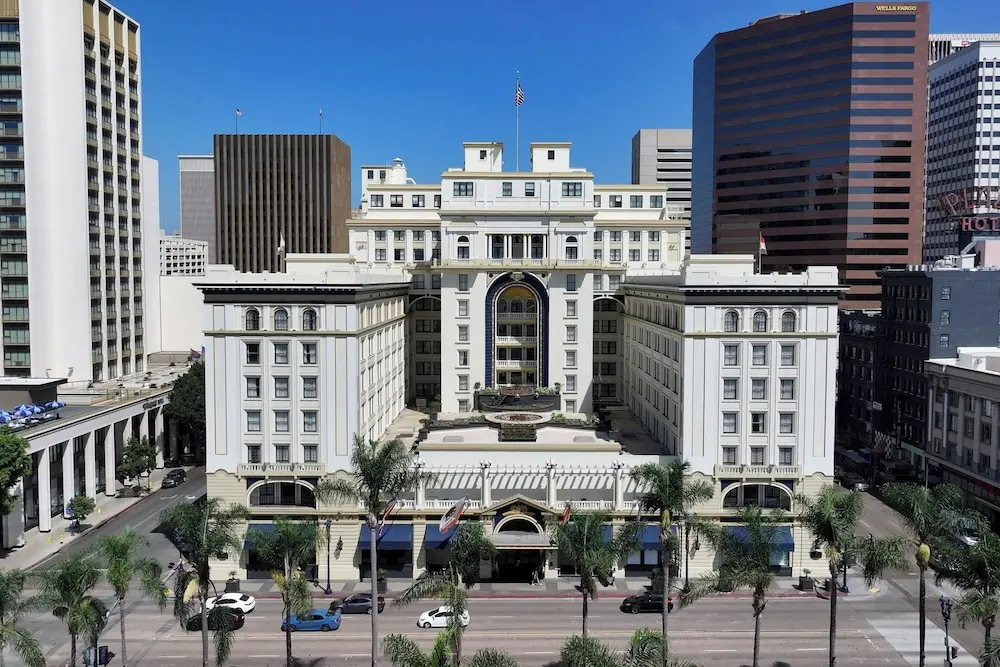
To define the best downtown urban hotels in the us, one must shift perspective from the guest’s desire to the asset’s function. “Best” is not a static designation; it is a variable metric determined by how effectively a property resolves the inherent friction of urban hospitality. Downtown locations inherently impose costs—land scarcity, regulatory compliance, union labor, traffic, and noise—that suburban or resort properties avoid. A hotel that manages to mitigate these stressors while maintaining high levels of service and profitability is, by definition, a top-tier asset.
A common misunderstanding is the conflation of “luxury” with “performance.” A property may feature high-end finishes and impeccable service, yet if it fails to leverage its urban location for ancillary revenue (such as high-traffic F&B or co-working integration), it is an inefficient asset. The best downtown urban hotels in the us are those that utilize their physical footprint to capture multiple revenue streams, effectively becoming a destination for residents as much as travelers. This requires a sophisticated approach to “placemaking,” where the hotel’s public spaces are designed to facilitate interaction rather than merely process check-ins.
The risk of oversimplification here is significant. Analysts often rely on ADR (Average Daily Rate) or RevPAR (Revenue Per Available Room) as the sole indicators of quality. While these are critical, they are lagging indicators. The truly leading indicators of a superior urban property include its “Local Market Penetration”—the degree to which the property is integrated into the local economy—and its “Operational Agility”—how quickly the property adapts its pricing and staffing to the dynamic, often unpredictable nature of urban demand.
Deep Contextual Background: The Evolution of Urban Hospitality
The trajectory of urban hospitality in America has undergone three distinct phases. The mid-century era prioritized the “Grand Dame” model: massive, ornate lobbies and expansive ballrooms designed for large-scale, static gatherings. These were monuments to stability. The subsequent era of the 1980s and 1990s introduced standardization and the rise of the global brand, prioritizing predictability and efficiency over local character.
In the 2020s, we have entered the “Integration” phase. The pandemic accelerated a fundamental change in the relationship between the city, the office, and the hotel. Today, the most successful downtown properties are those that have dismantled the barriers between the lobby and the street. They have embraced “regenerative hospitality”—the concept that a hotel should contribute to, rather than extract from, its urban environment. This has meant repurposing underutilized business centers into neighborhood co-working hubs and converting stale banquet halls into high-frequency, all-day dining venues that draw from the local population.
Conceptual Frameworks and Mental Models
To audit the quality of a downtown property, apply these frameworks:
-
The Proximity-Utility-Price Triad: Excellence is found in the overlap of physical location (proximity to demand drivers like convention centers or transit), functional utility (the ability of the space to serve multiple uses), and pricing power (the ability to maintain margins despite market volatility).
-
The Operational Friction Index: A measure of how much “friction” the property creates for its guest. High-friction properties are those where the urban density becomes a burden (e.g., slow elevator banks, difficult loading zones, lack of soundproofing). Low-friction properties have engineered away these common urban ailments.
-
The Revenue Density Model: This framework calculates revenue per square foot. The best downtown urban hotels in the us maximize this metric by ensuring that every square foot of the hotel, from the basement to the roof, has a designated, revenue-generating function.
Key Categories and Variations of Asset Performance
Performance profiles vary based on the hotel’s strategic focus.
| Category | Primary Market | Operational Focus | Key Performance Lever |
| Business-Central | Corporate Travel | Efficiency/Connectivity | RevPAR; Speed of Service |
| Lifestyle/Boutique | Leisure/Experience | F&B/Design Narrative | ADR; Ancillary Revenue |
| Adaptive Reuse | Cultural Tourists | Placemaking | Brand Equity; Local Loyalty |
| Hybrid/Co-living | Digital Nomads | Community/Tech-Stack | Occupancy; Long-stay ADR |
Realistic decision logic dictates that when evaluating these assets, the “Luxury Business” category often suffers from lower profit margins due to excessive labor costs, while “Lifestyle/Boutique” properties tend to be more volatile, requiring constant reinvestment to maintain their “trending” status.
Detailed Real-World Scenarios
Scenario 1: The Convention Anchor
-
Constraint: A 500-room property located adjacent to a major municipal convention center during a low-occupancy quarter.
-
Decision: The hotel pivots to offer “co-working-meets-leisure” packages to local remote workers, converting underused lobby space into semi-private workstations.
-
Failure Mode: Attempting to force the property to operate as a “luxury destination” when the location is strictly utilitarian, resulting in a mismatch between pricing and the guest’s environment.
-
Second-Order Effect: The pivot generates consistent, non-room revenue, stabilizing cash flow when convention traffic is absent.
Scenario 2: The Urban Boutique Pivot
-
Constraint: A small, 100-room hotel in a historic district experiences a decline in leisure bookings.
-
Decision: Rebranding the ground-floor restaurant to become a local neighborhood hotspot, managed by a third-party group, to drive “destination dining.”
-
Failure Mode: Maintaining an in-house F&B operation that lacks the expertise to compete with local restaurants, resulting in high “cost per occupied room” for room service and low quality.
-
Second-Order Effect: The external operator assumes the labor and inventory risk, while the hotel captures steady, diversified income.
Planning, Cost, and Resource Dynamics
The “Total Cost of Ownership” (TCO) for a downtown property is disproportionately high due to labor and utility requirements.
| Cost Variable | Impact | Variability | Strategy |
| Labor (Unionized) | High | Low | Automation of back-office tasks |
| Utilities | High | Extreme | Green-building retrofit/load management |
| Maintenance | Moderate | Moderate | Predictive maintenance/Asset lifecycle tracking |
| Marketing | Moderate | High | Direct booking incentives vs. OTA reliance |
One of the defining characteristics of the best downtown urban hotels in the us is their ability to control these costs through granular data management. They do not guess; they track CPOR (Cost Per Occupied Room) with precision.
Tools, Strategies, and Support Systems
-
Automated Revenue Management: Systems that adjust pricing in real-time based on local events, traffic, and competitor supply.
-
IoT-Enabled Sustainability: Smart HVAC and lighting systems that adjust based on occupancy, reducing utility waste in empty rooms.
-
Third-Party F&B Management: Leveraging the expertise of professional restaurant groups to manage high-volume, high-risk dining spaces.
-
Integrated Guest Communication: Centralized platforms that handle all guest interactions—from booking to check-out—reducing the need for manual front-desk intervention.
-
Predictive Maintenance: IoT sensors that alert engineers to equipment failures (e.g., HVAC units) before they affect guest rooms.
Risk Landscape and Failure Modes
The “Urban Friction” risk is the primary failure mode. Properties that fail to mitigate city-specific issues—noise, access, and service delays—quickly become obsolete. Another risk is the “Competitive Mimicry” trap, where a hotel attempts to copy the features of the current “trendiest” hotel in the city without having the operational infrastructure to sustain that model. This often leads to high CAPEX spending without a commensurate return on investment.
Governance, Maintenance, and Long-Term Adaptation
To maintain status as a high-performer, these hotels must treat the physical asset as a living entity.
-
Audit Cycles: Monthly operational audits focused on the ” guest journey.” Are there bottlenecks in check-in? Are the common areas functioning as intended?
-
Adjustment Triggers: If GOPPAR (Gross Operating Profit Per Available Room) drops by 5% over two quarters, a comprehensive review of operational workflows must be initiated.
-
Layered Checklist:
-
[ ] Are systems (Wi-Fi, HVAC, elevators) operating at >99% uptime?
-
[ ] Is the public-to-private space ratio optimized for current demand?
-
[ ] Are sustainability metrics (waste, energy) improving year-over-year?
-
Measurement, Tracking, and Evaluation
-
Leading Indicators: “Direct-to-OTA Booking Ratio.” A higher direct ratio suggests brand strength and customer loyalty.
-
Lagging Indicators: “Gross Operating Profit Per Available Room” (GOPPAR).
-
Qualitative Signals: Reviews focusing on “service recovery.” When things go wrong in a dense urban environment, how the staff reacts determines if the property remains in the “best” category.
Common Misconceptions and Oversimplifications
-
Myth: “High star ratings ensure the best experience.” Correction: Many “best” hotels operate in the 4-star tier, providing consistent, efficient service without the bloat and service-failure risks of some 5-star properties.
-
Myth: “Location is everything.” Correction: Location is a prerequisite, not a differentiator. In a dense city, every hotel has a good location; the differentiator is how the property uses its physical space.
-
Myth: “Luxury equates to profit.” Correction: Leaner, more efficient models often achieve higher margins than ultra-luxury, high-labor setups.
Ethical, Practical, and Contextual Considerations
The growth of urban hospitality has an inherent ethical dimension regarding community integration. The best downtown urban hotels in the us recognize they are not just businesses; they are neighbors. Responsible operators prioritize local hiring, support local supply chains, and design their properties to be accessible to the community. This is not just a moral stance; it is a practical one that fosters brand affinity and resilience against the “generic” nature of global travel.
Conclusion
Excellence in the downtown urban hospitality market is an achievement of precision. It is the ability to maintain a calm, efficient, and profitable experience amidst the inherent chaos of the American city center. While subjective lists often focus on superficial design trends, the analytical reality is that the best downtown urban hotels in the us succeed through operational discipline, technological integration, and a sophisticated understanding of the local economic fabric. As cities continue to evolve, the properties that will thrive are those that reject the “one-size-fits-all” model in favor of adaptive, data-driven, and community-integrated strategies. They do not merely house guests; they function as the essential anchors of the modern urban experience.