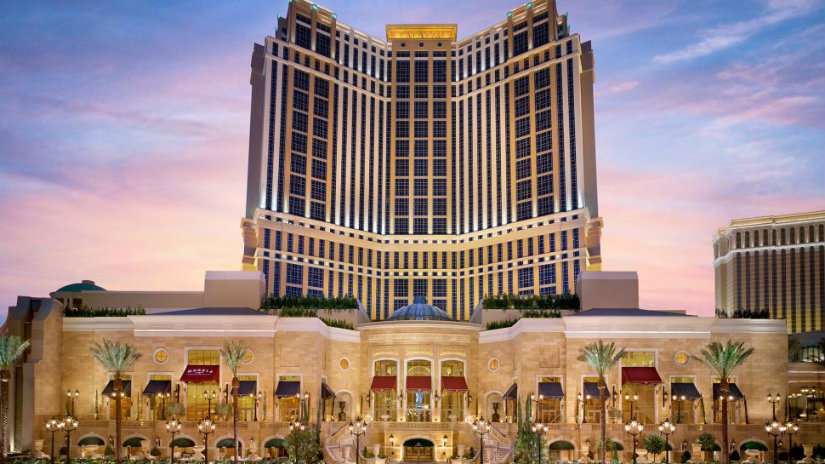
Best Urban Hotels United States: A Strategic Audit of Hospitality Infrastructure
The modern American city is rarely a static object to be consumed; it is a complex, evolving system of labor, geography, and historical layering. To view an urban environment—and by extension, its lodging—merely as a collection of tourist sites is to overlook the fundamental machinery that gives these places their character. Whether one is observing the adaptive reuse of industrial corridors in the Midwest or the hyper-densification of the Pacific coastal hubs, the true value of these locations lies in their systemic operational logic. A city is a laboratory of human behavior, and the most compelling observations occur when one stops acting as a spectator and begins acting as an analyst.
When evaluating the best urban hotels the United States architecture has to offer, the focus must shift from the curated to the authentic. Authenticity here is not a marketing buzzword, but a measure of how a city reconciles its past industrial imperatives with its current economic realities. The experience is found in the friction between these eras—the preserved masonry of a 19th-century warehouse district housing a modern tech-incubator, or the way a neighborhood’s transit infrastructure dictates the dietary habits of its residents. It is the ability to read these urban signals that constitutes a meaningful engagement.
This analysis is intended for the reader who demands more than a surface-level itinerary. It aims to deconstruct the city into its parts: the built environment, the socioeconomic strata, the transit dynamics, and the cultural sediment. By adopting this rigorous, almost ethnographic approach, one moves beyond the superficial checklists that dominate travel literature. One begins to understand how the American city functions, where it fails, and why it remains the most significant driver of innovation in the modern era.
Understanding “best urban hotels in the United States.”
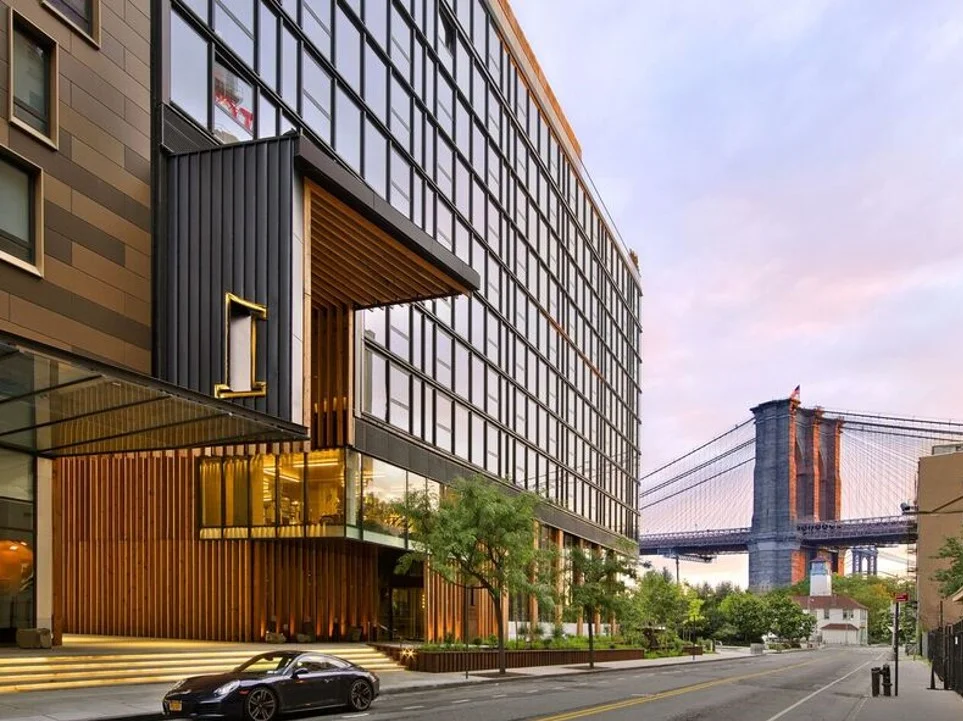
To properly define the best urban hotels the United States markets provide, one must first discard the consumerist framework that equates experience with entertainment. In an analytical context, an urban hotel is defined by the depth of insight it provides into the human condition within that specific geographic node. It is the capacity of a building to reveal its internal logic through its physical, social, and economic architecture. Many visitors mistake a hotel’s facade—its lobby design, its curated art, its popular dining district—for the asset itself. This is an oversimplification that risks missing the true operational pulse of the property.
A common misunderstanding involves the assumption that “top-tier” status is fixed. In reality, urban hospitality value is volatile. Neighborhoods that were industrial centers ten years ago are now the sites of innovative knowledge-work clusters. Consequently, the best urban hotels united states operators in the United States manage are not static points on a map but shifting currents of energy and investment. To experience a city effectively through its hotels, one must look for the “seams”—the boundaries between gentrified districts and historic enclaves, the intersection of public transit nodes and private residential zones. These seams reveal the systemic priorities of the city’s governance and its demographic future.
Furthermore, the risk of oversimplification is significant. When we categorize hotels as “luxury” or “budget,” we ignore the systemic failures that often provide the most insight. A hotel’s struggle with housing density, for instance, provides a more profound urban experience than a perfectly manicured, isolated retreat. True metropolitan literacy involves engaging with these challenges. It requires a willingness to observe the property as it is, not as we wish it to be.
Deep Contextual Background: The Evolution of Metropolitan Systems
The American urban form is a product of rapid, sometimes chaotic, adaptation. From the rail-based expansion of the late 19th century to the highway-centric sprawl of the post-WWII era, cities have been subjected to massive, top-down engineering efforts. The industrial hubs of the Midwest were designed for the movement of heavy goods; the sun-belt cities were designed for the movement of private automobiles. Understanding this history is foundational to appreciating the current state of these cities and the hotels that inhabit them.
When we look at the best urban hotels united states developers have produced, we are essentially looking at the results of these design philosophies colliding with modern demand. The walkable “legacy city” of the Northeast offers a tactile, dense experience that is fundamentally different from the distributed, multimodal experiences of the Western megalopolises. This evolution has left a physical record in the street layout, the building materials, and the transit infrastructure. Every city tells the story of its own economic boom and bust, and identifying the remnants of these cycles is a core component of high-level urban engagement.
Conceptual Frameworks and Mental Models
To analyze a hotel or city with professional rigor, one should employ a set of specific frameworks:
-
The Infrastructure-as-Foundation Model: Treat the city’s transit, utility, and telecommunications network as the “primary architecture.” The hotel is merely a node that sits atop this foundation.
-
The Neighborhood Stratification Matrix: This views a city as a series of nested socioeconomic layers. One does not just stay in a hotel; one traverses these layers to see how they influence labor, food, and social interaction.
-
The Adaptive Reuse Metric: Evaluate how well a property preserves its history while accommodating modern needs. High-performing assets do not erase their industrial past; they recontextualize it.
-
The Walkability vs. Transit-Speed Trade-off: Analyze the tension between the slow, human-scale experience of a neighborhood and the rapid, machine-scale experience of the city’s transit system.
Key Categories and Variations of Urban Assets
To structure an investigation, categorize the urban landscape into distinct operational types:
| Asset Type | Primary Characteristic | Friction Factor | Intellectual Utility |
| Legacy Industrial | High density, transit-centric | High (Old infrastructure) | Understanding the roots of US labor |
| Hyper-Growth Tech | Low density, rapid development | High (Congestion/Cost) | Understanding the future of knowledge work |
| Cultural Heartland | Stable, institution-heavy | Low (Predictable) | Understanding institutional continuity |
| Peripheral Frontier | Low density, emerging | Moderate (Transit gaps) | Understanding urban expansion |
Realistically, the most valuable engagement occurs when one compares these archetypes. For example, contrasting the systemic efficiencies of a legacy port city with the rapid, venture-backed development of a tech-growth node provides a more nuanced understanding than either could provide in isolation.
Detailed Real-World Scenarios
Scenario 1: The Transit-System Audit
-
Constraint: Navigating a legacy city (e.g., Boston) versus a hybrid city (e.g., Los Angeles).
-
Decision Point: Choosing to prioritize the transit experience over the hotel destination.
-
Failure Mode: Expecting a legacy system to provide modern, high-speed convenience, leading to frustration.
-
Second-Order Effect: Understanding the systemic constraints that prevent infrastructure upgrades, which reveals deeper political and economic truths about the city.
Scenario 2: The Adaptive Reuse Observation
-
Constraint: A rapidly gentrifying industrial zone (e.g., portions of Detroit or Pittsburgh).
-
Decision Point: Engaging with both the original industrial occupants and the new commercial tenants.
-
Failure Mode: Only visiting the new “curated” hotel districts and ignoring the surrounding context.
-
Second-Order Effect: Noticing the displacement patterns, providing a real-time data point on economic gentrification.
Planning, Cost, and Resource Dynamics
The “Total Cost of Access” (TCA) is a crucial metric for the urban analyst. It is not merely the financial cost of a room; it is the cognitive and temporal cost of navigating the city.
| Resource Factor | Impact | Variability | Mitigation |
| Time/Latency | Extreme | High (Traffic/Transit) | Localize activities by node |
| Cognitive Load | High | Extreme (Density) | Strategic downtime planning |
| Access/Connectivity | Moderate | Low | Pre-arrival mapping of transit hubs |
| Financial/TCA | Moderate | High (Surge pricing) | Variable duration planning |
Tools, Strategies, and Support Systems
-
Archival Research Protocols: Before visiting, research the city’s urban planning history, particularly the development of its central business district.
-
Ethnographic Observation: Move through neighborhoods during non-peak hours to observe the “lived” reality, not just the hotel’s tourist veneer.
-
Transit-First Mapping: Plan your engagement based on the transit lines, not the attractions. The transit infrastructure is the skeletal system of the city.
-
Local Media Consumption: Read the local urban planning blogs or municipal records. They often highlight the most interesting urban dynamics.
-
Data Layering: Use mapping software to overlay socioeconomic data on top of your physical exploration route to identify correlations.
Risk Landscape and Failure Modes
There is a distinct taxonomy of failure for urban observation. One of the most common errors is the “Curated Loop” failure, where the analyst spends their entire visit within a sanitized, tourist-optimized district. This creates a feedback loop of false impressions. Another risk is the “Infrastructure Bias”—the tendency to judge a city purely by its transit efficiency. While important, transit is only one variable. A city with poor transit might possess a highly resilient social infrastructure. Failing to account for these variables creates an incomplete picture of the best urban hotels the United States can offer.
Governance, Maintenance, and Long-Term Adaptation
To effectively engage with American cities, one must treat the engagement as a project.
-
Audit Cycles: If you visit a city repeatedly, maintain a “Change Log.” What businesses failed? What infrastructure was built? What streets were pedestrianized?
-
Adjustment Triggers: If a neighborhood becomes too sanitized, it loses its analytical utility. It is time to move to the next frontier of development.
-
The Layered Checklist:
-
[ ] Observe transit reliability.
-
[ ] Catalog the ratio of independent vs. corporate commerce.
-
[ ] Note the state of public space maintenance.
-
[ ] Identify the primary demographic shifts.
-
Measurement, Tracking, and Evaluation
-
Leading Indicators: “Business Turnover Rate.” High turnover indicates a volatile, potentially gentrifying environment.
-
Lagging Indicators: “Civic Infrastructure Quality.” A park’s state of repair is a lagging indicator of municipal budget allocation and civic pride.
-
Qualitative Signal: “Pedestrian Engagement.” Are the streets being used, or are they just thoroughfares? The vibrancy of a street is the primary measure of an urban experience’s success.
Common Misconceptions and Oversimplifications
-
Myth: “Walkability is the only metric of quality.” Correction: Many high-functioning American cities are multimodal. Ignoring the automobile’s role in certain urban systems provides an incomplete understanding of their economic reality.
-
Myth: “The most famous district is the ‘heart’ of the city.” Correction: The famous district is often a tourist trap. The economic and social heart is frequently found in the working-class or industrial fringe.
-
Myth: “Gentrification is universally negative.” Correction: It is a complex economic process involving massive capital reinvestment that can save historic infrastructure, even as it displaces residents. It is neither purely good nor purely bad; it is a systemic shift.
Ethical and Practical Considerations
Urban engagement is not ethically neutral. One must be conscious of one’s presence. There is an ethical dimension to consuming a city’s culture without engaging with its systemic inequalities. When researching the best urban hotels united states, sectors have built serious analysts acknowledge the human cost of the urban development they are witnessing. They do not treat the city as an amusement park, but as a living, breathing community that deserves respect, regardless of the analyst’s objective gaze.
Conclusion
The pursuit of deep metropolitan insight is an exercise in rigorous observation and intellectual honesty. It requires a departure from the “visitor” mindset in favor of a “system analyst” philosophy. By focusing on the infrastructure, the history, and the socioeconomic layers of the city, the observer can move beyond the superficial and engage with the structural reality of the environment. The most successful urban engagement is one that provides a clear, unvarnished view of the city’s strengths and systemic tensions, ensuring that the primary goal—understanding the American metropolitan condition—remains the focus. By following this systematic approach, one arrives at a truly comprehensive guide to the best urban hotels united states geography has to offer.