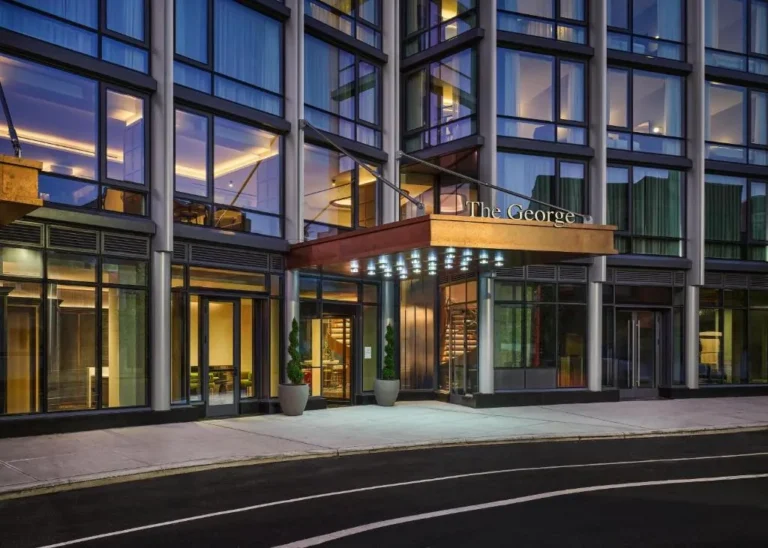
The American Urban Hotel Lifestyle: A Strategic and Cultural Audit
The evolution of the metropolitan landscape has fundamentally altered the relationship between the individual and the built environment. No longer is the city merely a site of labor; it has become a fluid ecosystem where the boundaries between residential stability and transient lodging have essentially dissolved. This phenomenon, which represents a structural shift in how space is consumed in major US hubs, is characterized by a move toward hospitality-as-a-service. It is a paradigm where the amenities, security, and logistical convenience of a high-end hotel are integrated into the daily cadence of the long-term metropolitan resident or the professional “hub-jumper.”
This shift is driven by a confluence of macroeconomic factors: the rise of the specialized knowledge economy, the persistent scarcity of high-quality urban housing, and a cultural pivot toward “access” over “ownership.” When one analyzes the current state of major American corridors—from the tech-centric density of Seattle to the institutional permanence of Washington D.C.—a distinct pattern emerges. The hotel is no longer a peripheral utility for the traveler; it is a central node in a broader socio-economic network. It serves as an office, a social club, and a primary residence, often simultaneously.
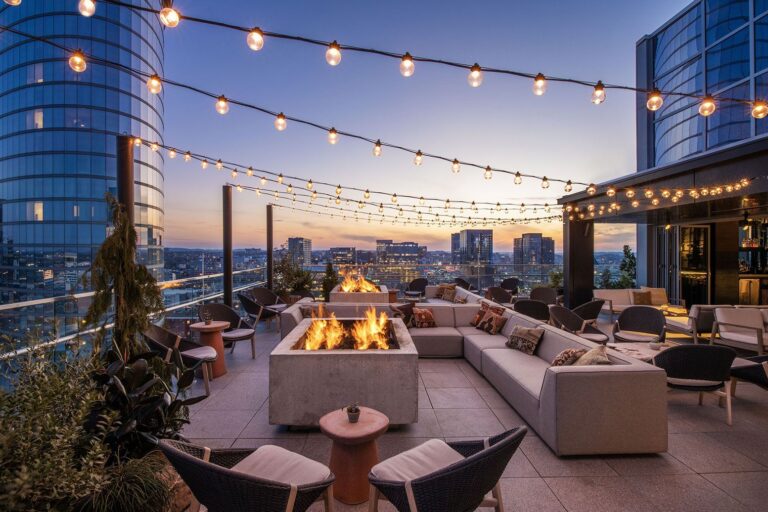
To engage with this topic requires an analytical detachment. We must look past the aesthetic allure of rooftop lounges and curated lobbies to examine the hard logistics of urban occupancy. The following forensic audit explores the systemic underpinnings of this lifestyle, detailing the frameworks, risks, and operational realities that define the contemporary American experience in hospitality-centric urban cores.
Understanding “american urban hotel lifestyle”
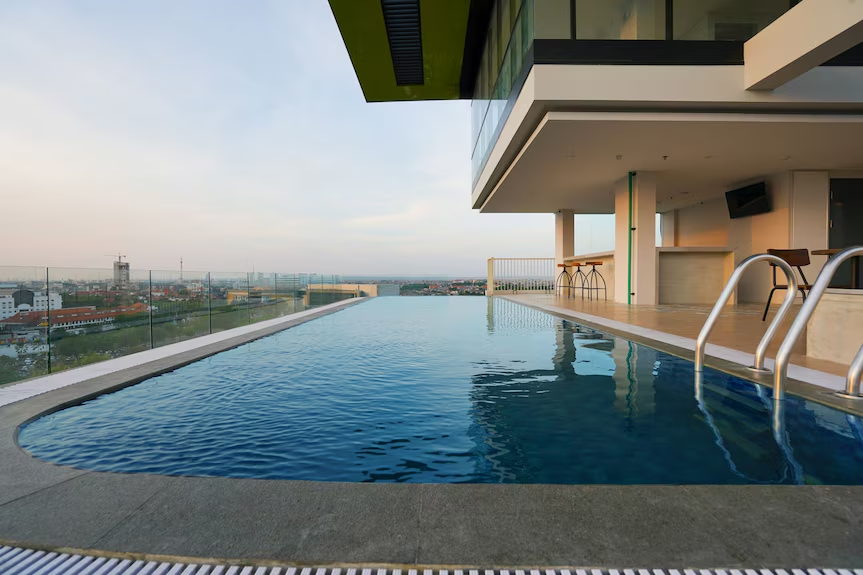
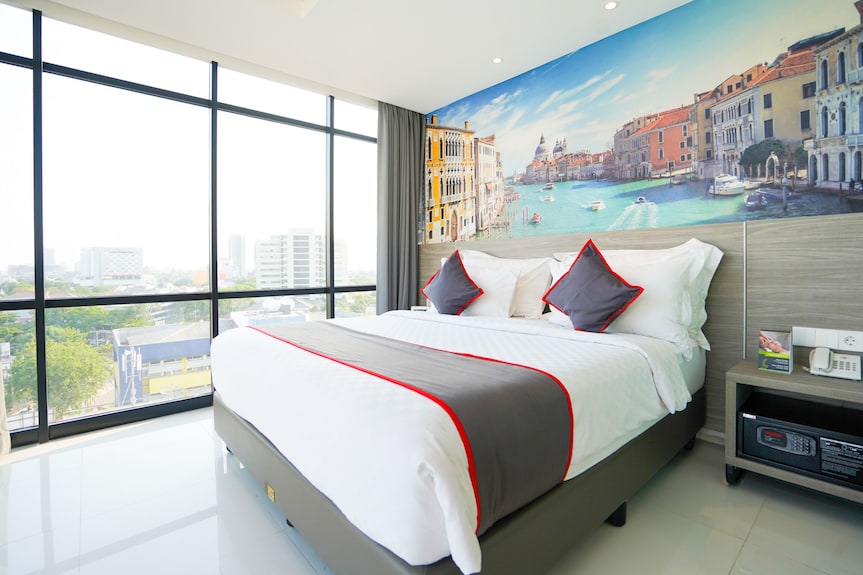
At its core, the american urban hotel lifestyle is a response to the “friction” of traditional metropolitan living. In cities like New York, San Francisco, or Chicago, the administrative burden of maintaining a traditional apartment—utility management, security logistics, maintenance, and the lack of integrated service—often conflicts with the velocity of modern professional life. The hotel lifestyle seeks to externalize these burdens. It is a model where the individual pays a premium to offload the “operational overhead” of their existence onto a professional management team.
A multi-perspective explanation reveals that this isn’t merely a luxury play, though it is often marketed as such. From a sociological standpoint, it represents the “institutionalization of the domestic sphere.” From a real estate perspective, it is a “density play,” maximizing the revenue per square foot of urban land. Common misunderstandings frequently frame this as a lack of permanence or a nomadic wandering. This is an oversimplification. For many, the hotel lifestyle is a deliberate choice for hyper-permanence—placing oneself at the literal center of a city’s economic and cultural activity without the tether of property maintenance.
The risk of oversimplifying this trend lies in ignoring its structural necessity. As the American workforce becomes more specialized and mobile, the requirement for “plug-and-play” living increases. If one views the hotel merely as a bedroom, the value proposition fails. If one views it as a “logistical platform,” the high cost of entry begins to reflect a rational economic trade-off. This lifestyle is about the optimization of time—the ultimate scarce resource in a 24-hour urban economy.
Deep Contextual Background: The De-coupling of Home and Hearth
Historically, the American urban hotel was the “residential hotel” of the late 19th and early 20th centuries. These institutions housed everyone from struggling writers to wealthy dowagers. However, the post-WWII era’s push toward suburbanization and the “nuclear family home” marginalized this model, relegating hotels to strictly transient use. The 21st-century resurgence of the hotel lifestyle is a “re-urbanization” movement, catalyzed by the digital revolution.
This systemic evolution has been accelerated by the “lifestyle brand” explosion of the 2010s. Developers realized that by offering “hotel-style” amenities in residential towers (branded residences), they could capture the demographic that desired hotel convenience but wanted traditional lease stability. Today, the lines are nearly invisible. We see “hometels,” co-living spaces with concierge desks, and luxury hotels that offer “resident-only” floors. This is the result of fifty years of urban planning shifting back toward density and service-oriented development.
Conceptual Frameworks and Mental Models
To analyze the performance and viability of this lifestyle, we use several mental models:
-
The Logistical Externalization Model: This framework calculates the total value of “freed-up time” by offloading laundry, cleaning, and security to the hotel staff. If the individual’s hourly earning power exceeds the cost of these services, the lifestyle is economically sound.
-
The Hub-and-Spoke Network: View the hotel as the “hub” where the individual sleeps and works, with the “spokes” being the city’s transit, dining, and cultural amenities. The value of the hotel is directly proportional to the density of the spokes.
-
The Friction-to-Flow Ratio: This assesses how many steps are required to perform daily tasks. A high-performing hotel lifestyle reduces these steps to near zero (e.g., the elevator goes directly to the gym, which goes directly to the coffee shop, which goes directly to the coworking space).
Key Categories and Variations of Modern Urban Occupancy
The variety within this sector is vast, ranging from utilitarian efficiency to extreme luxury.
| Category | Typical Occupant | Core Value Driver | Key Trade-off |
| Corporate Residential | Consultant / Exec | Predictability / Expense | Lack of character |
| Branded Residences | Ultra-HNWI | Security / Prestige | High HOA / Fees |
| Lifestyle Boutique | Creative / Tech | Community / Design | Noise / Volatility |
| The “Digital Node” | Remote Professional | Connectivity / Agility | Limited square footage |
| Extended Stay 2.0 | Relocator / Contractor | Functional Kitchen / Cost | Location periphery |
Realistic decision logic dictates that as the duration of stay increases, the need for “functional space” (kitchenettes, separate work areas) begins to outweigh the need for “hotel services” (daily turndown, lobby bars).
Detailed Real-World Scenarios
Scenario 1: The High-Velocity Consultant
-
Constraint: Requires 4-day-a-week residency in a Tier 1 city (e.g., Boston) with zero tolerance for maintenance issues.
-
Decision: Opts for a high-end hotel with a “membership” program that stores personal items between stays.
-
Failure Mode: The hotel experiences high-volume events (weddings), leading to noise and degraded service during the consultant’s work hours.
-
Second-Order Effect: The consultant realizes that “hotel life” without a private “resident lounge” leads to burnout.
Scenario 2: The Urban Retiring Minimalist
-
Constraint: Downsizing from a suburban home to a city-center hotel suite to be closer to healthcare and theater.
-
Decision: Selecting a property with a strong concierge team that manages medical appointments and transit.
-
Failure Mode: Inflation in service fees and the loss of “community” as transient guests cycle through.
-
Second-Order Effect: The resident finds that the hotel’s “placemaking” activities are essential to psychological well-being.
Planning, Cost, and Resource Dynamics
The economics of the american urban hotel lifestyle are characterized by high “all-in” costs but low “hidden” costs.
| Cost Component | Hotel Lifestyle | Traditional Apartment |
| Monthly Payment | High (Aggregated) | Moderate (Base Rent) |
| Utilities/Wi-Fi | Included | Additional ($200-$400+) |
| Security/Amenity | Included | Included (via Fees) |
| Labor (Cleaning) | Daily/Weekly Included | Additional ($150/session) |
| Flexibility | High (Days/Weeks) | Low (12-month lease) |
The “Direct Cost” of the hotel might be 30% higher than a luxury lease, but when the “Indirect Costs” of labor, utilities, and furniture are factored in, the parity is often surprising.
Tools, Strategies, and Support Systems
-
Loyalty Arbitrage: Using elite status to waive resort fees, secure suite upgrades, and access breakfast credits—effectively reducing the daily cost by 15-20%.
-
Concierge-as-Agent: Utilizing the concierge not for “dinner reservations,” but as an administrative assistant for mail, deliveries, and local logistics.
-
Storage Units/Valet Luggage: Services that pick up and drop off personal wardrobes between stays to facilitate “luggage-free” travel.
-
Co-working Subscriptions: Pairing a small hotel room with a nearby high-end co-working space to solve the “work-from-bed” posture issues.
-
Digital Mail Scanning: Converting physical mail into a digital format to maintain a permanent virtual address while staying in transient spaces.
Risk Landscape and Failure Modes
The primary risk is “Institutional Instability.” Unlike a lease, a hotel can change its policy, price, or brand overnight. If a property is sold, a long-term resident may find their “home” suddenly converted into a different asset class. There is also the “Social Isolation” factor; living in a space where everyone else is “just visiting” can lead to a sense of rootlessness. We call this the “Transient Burnout,” where the novelty of service is replaced by a longing for a “lived-in” environment.
Governance, Maintenance, and Long-Term Adaptation
How does one “govern” a hotel life? It requires a transition from “maintenance” to “audit.”
-
Review Cycles: Every 90 days, audit the value-to-cost ratio. Has the service quality slipped? Are the “included” amenities still functional?
-
Adjustment Triggers: If the “Destination Fee” or “Facility Fee” increases without a commensurate increase in service, it is a trigger to move to a competing property.
-
Layered Checklist:
-
[ ] Verify “Resident” status with the General Manager (personalize the relationship).
-
[ ] Confirm noise-insulation integrity (check for upcoming renovations).
-
[ ] Audit Wi-Fi bandwidth during peak hours (the “Working Night” test).
-
Measurement, Tracking, and Evaluation
Performance of this lifestyle is measured by “Daily Friction Count.” How many times did you have to solve a logistical problem today? In a successful american urban hotel lifestyle, that number should be zero.
-
Leading Indicator: The speed at which the front desk recognizes you. This indicates “Systemic Integration.”
-
Lagging Indicator: The total number of hours “saved” per month compared to a traditional home.
-
Qualitative Signal: The quality of sleep. In a high-density urban core, soundproofing is the ultimate luxury indicator.
Common Misconceptions and Oversimplifications
-
Myth: “It’s only for the rich.” Correction: Many digital nomads use mid-scale extended-stay hotels to live in expensive cities (e.g., Denver, Atlanta) for less than the cost of a modern apartment plus furniture.
-
Myth: “There is no kitchen.” Correction: Most modern urban suites designed for this lifestyle include “high-efficiency kitchenettes.”
-
Myth: “You can’t have a pet.” Correction: The hotel industry is increasingly “pet-first” as they seek to capture the long-term resident market.
-
Myth: “It’s lonely.” Correction: Lobby culture in hotels is often more social than the hallways of a traditional apartment building.
Ethical and Practical Considerations
There is a growing debate about the “Hotelization of Housing.” When hotels pivot toward residential use, do they reduce the available housing stock for local families? Practically, one must also consider the “Privacy Paradox”—you have someone cleaning your room every day, which means you have zero absolute privacy. For some, this is a service; for others, it is an intrusion.
Conclusion
The american urban hotel lifestyle is more than a trend; it is a structural adaptation to the demands of the modern, dense, and high-velocity city. It represents a refined understanding of the value of time and the efficiency of outsourced labor. While it carries risks of isolation and institutional volatility, its growth reflects a fundamental truth about 21st-century urbanism: the most valuable amenity is no longer space, but the removal of logistical friction. For those who can navigate the costs and the “transient burnout,” the hotel becomes the ultimate city-center asset—a platform for a life lived at the heart of the action, without the anchors of the past. Success in this mode requires a shift in mindset from “owning a home” to “managing an experience,” ensuring that the property serves the individual, and not the other way around.