Top Urban Hotel Packages: A Strategic Audit of Yield and Value
The hotel package is rarely a gift to the consumer. It is, in its purest form, an instrument of inventory management and yield optimization. When a property introduces a bundle, it is solving a specific operational deficit: the need to increase RevPAR (Revenue Per Available Room) during shoulder periods, to drive ancillary revenue in stagnant food and beverage outlets, or to hedge against the transparency of dynamic room rates. For the discerning analyst, a hotel package represents a negotiation between the property’s desire for margin protection and the guest’s requirement for perceived utility.
In the high-density environment of the major American city, the proliferation of these offerings creates a complex, often opaque marketplace. Navigating the top urban hotel packages requires shifting one’s mindset from that of a consumer hunting for a “deal” to that of a strategist evaluating a line item. The fundamental question is not whether the package includes a discounted rate, but whether the bundled components—parking, dining credits, transit access, or service upgrades—actually integrate into the guest’s operational requirements. If the package forces the consumption of unwanted services, it is an inefficiency, not an asset.
True mastery of metropolitan travel involves identifying the overlap between a property’s excess capacity and one’s own logistical needs. This article serves as an audit of the industry’s bundling strategies, stripping away the marketing veneer to examine the mechanical and economic reality of urban hospitality. It is designed for those who view travel as a capital expenditure rather than a discretionary expense, and who require a systematic approach to extracting value from the current hospitality ecosystem.
Understanding top urban hotel packages
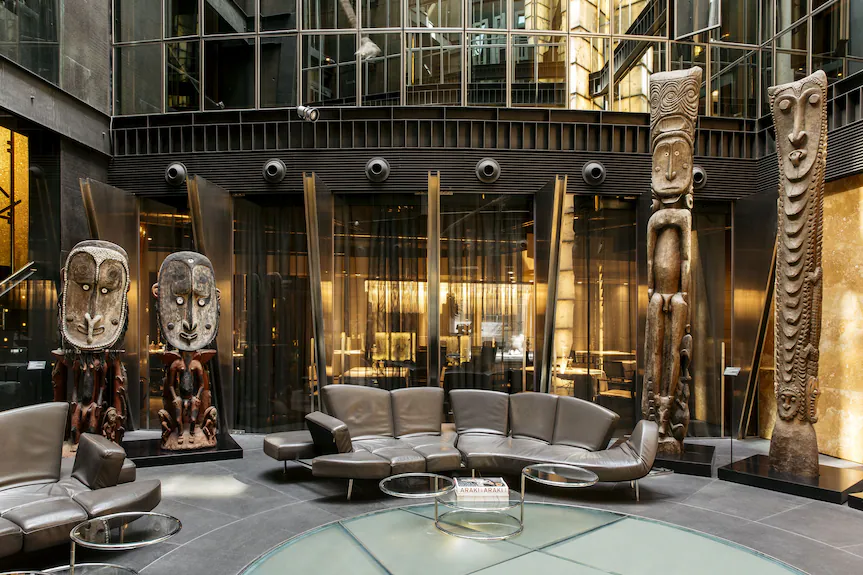
The nomenclature of the “package” in the hospitality industry is frequently misleading. It implies a synthesis of disparate services into a coherent, value-added whole. In reality, top urban hotel packages are often constructed as “decoy” structures—pricing mechanisms designed to obfuscate the true daily rate by inflating the total transaction cost with services the guest may not fully utilize. To understand these packages, one must look at them through the lens of Revenue Management (RM).
A common misunderstanding is that packages exist to save the guest money. While this can happen, the primary objective of a package is to increase the Total RevPAR. By bundling high-margin, low-variable-cost items (such as a spa credit or a continental breakfast) with a room night, the hotel ensures that the guest spends a higher total amount on-property. The “discount” on the room is effectively cross-subsidized by the profit margin on the bundled services.
The oversimplification risk here is severe. Observers often focus on the “sticker value” of the package—the sum of the retail prices of the individual components—and compare it to the package price. This is an flawed heuristic. The relevant calculation is not the nominal value, but the realized value. If a package includes a $50 daily food credit, but the hotel’s on-site dining options are priced 40% above the local market average, the real value of that credit is diminished. Analytical rigor demands that every bundled component be audited against the guest’s actual requirements, rather than the hotel’s internal valuation.
Deep Contextual Background: The Evolution of Ancillary Revenue
The modern strategy of packaging emerged in response to the rise of Online Travel Agencies (OTAs) and the subsequent commoditization of room rates. As pricing parity agreements forced hotels to maintain standard rates across platforms, hoteliers needed a mechanism to differentiate and offer value without triggering “rate parity” violations. The package became the primary tool for this differentiation.
By bundling room nights with services, hotels regained the ability to hide the true base room rate from third-party price-tracking algorithms. This evolution transformed the package from a service-driven offering into a revenue-management necessity. The industry moved from a model of Transactional Hospitality—where the room was the product—to Systemic Hospitality, where the room is the entry point for a broader, high-margin consumption ecosystem. Understanding this history is vital for the modern traveler: a package is not a service improvement; it is a defensive maneuver against rate transparency.
Conceptual Frameworks and Mental Models
To evaluate whether a package is a strategic asset or a financial drain, apply the following frameworks:
-
The Margin Dilution Model: Calculate the true cost of the bundled items. Does the package offer items the hotel would have otherwise struggled to sell? If so, the package is a method of “inventory liquidation” disguised as value.
-
The Opportunity Cost Framework: Does selecting this package prevent you from utilizing superior, off-site services? If the package includes breakfast, but the city in question has a vibrant, superior local coffee and dining culture, the package is creating an opportunity cost by tethering you to the hotel’s infrastructure.
-
The Friction Coefficient: Does the package simplify the guest’s logistics (e.g., parking, high-speed Wi-Fi, laundry) or add complexity? The best packages are those that remove friction points in the professional day.
Key Categories and Variations of Bundled Assets
Broadly, metropolitan hotel packages can be sorted into distinct strategic archetypes.
| Package Category | Objective | Target Demographic | Value Reliability |
| Efficiency Bundle | Friction reduction | Corporate/Business | High |
| Experience Bundle | Ancillary revenue | Leisure/Weekend | Moderate |
| Asset-Lite Bundle | Occupancy bridging | Transient/Short-term | High |
| High-Touch Bundle | Premium positioning | Luxury/Discretionary | Variable |
The Efficiency Bundle (parking, laundry, connectivity) is the most reliable, as it addresses the recurring logistical needs of the urban traveler. The Experience Bundle (spa, dining, event access) is more volatile and depends entirely on the quality of the on-site operation. Decision logic suggests prioritizing packages that optimize for workflow, not lifestyle, when traveling for professional purposes.
Detailed Real-World Scenarios
Scenario 1: The “Corporate Continuity” Package
-
Constraint: A three-night stay in a high-density downtown core with limited transit connectivity.
-
Decision: The guest selects a package including daily valet parking and a $30/day food credit.
-
Failure Mode: The valet queue at 8:30 AM is perpetually backed up, leading to late departures for meetings. The food credit is restricted to a subpar lobby restaurant.
-
Second-Order Effect: The “value” of the package is negated by the productivity loss.
Scenario 2: The “Ancillary Overload”
-
Constraint: A city trip where the primary activity is off-site exploration.
-
Decision: The guest opts for a “Total Immersion” package with on-site dining and spa services.
-
Failure Mode: The guest never uses the spa or the on-site dining, effectively paying a 30% premium on the room rate for unused services.
Planning, Cost, and Resource Dynamics
The “Total Cost of Presence” (TCOP) includes the package premium.
-
Direct Costs: The package price vs. the Best Available Rate (BAR).
-
Indirect Costs: The hidden mark-ups on the bundled items.
-
Opportunity Cost: The value of alternative, non-bundled services that were foregone.
| Variable | Financial Impact | Variability |
| Base Rate | Primary | Low |
| Bundled Perks | Secondary | High (Value-dependent) |
| Operational Overhead | Tertiary | Low |
A robust audit confirms that if the TCOP of the package exceeds the cost of purchasing the required services a-la-carte, the package is a failure.
Tools, Strategies, and Support Systems
-
The “Shadow Rate” Audit: Before booking, check the property’s rate without the package. Calculate the individual cost of the bundled items.
-
Negotiation Agility: If traveling for business, negotiate the package contents. Ask to swap a “spa credit” for “early check-in/late checkout” or “higher bandwidth access.”
-
Redundancy Checks: Never bundle essential infrastructure (like Wi-Fi) if the property has a history of poor performance. Bundle only the “nice-to-haves.”
-
Property-Specific Vetting: Check the internal review cycles of the bundled dining outlets. A package is only as good as the kitchen servicing the dining credit.
Risk Landscape and Failure Modes
The primary failure mode in this sector is the Value Dilution Effect. Hotels often update the base room product without updating the package components. You may find a “modern” package that includes a concierge service that has been discontinued, or a “business” package that includes antiquated printer access. Furthermore, there is the Constraint Trap: packages often come with restrictive booking rules (e.g., non-refundable, no-change policies) that strip the traveler of the flexibility that is essential in urban environments. Navigating the top urban hotel packages requires a clear-eyed assessment of these constraints.
Governance, Maintenance, and Long-Term Adaptation
Treat your travel budget as a portfolio.
-
Review Cycles: Audit your package spend every 12 months. Have you actually utilized the bundled components, or have you been paying for latent capacity?
-
Adjustment Triggers: If a property’s food and beverage management changes, re-audit any package that relies on dining credits.
-
The Layered Checklist:
-
[ ] Verification of flexible booking terms.
-
[ ] Itemized cost comparison against a-la-carte rates.
-
[ ] Confirmation that the bundled services support (rather than distract from) your travel objectives.
-
Measurement, Tracking, and Evaluation
-
Leading Indicators: “Usage Rate.” If a bundled service (like a gym or spa) is not used, the package is failing.
-
Lagging Indicators: “Cost-Per-Use.” Divide the total package premium by the number of times you actually utilized a component.
-
Qualitative Signal: “Logistical Friction.” Did the package simplify your arrival/departure/daily schedule? If not, it failed its primary mission.
Common Misconceptions and Oversimplifications
-
Myth: “Bundled items are free.” Correction: There is no such thing as a free amenity. Every bundled item is priced into the total rate.
-
Myth: “Packages are better for long stays.” Correction: Long stays often benefit more from negotiated corporate rates than from static, retail-facing packages.
-
Myth: “The package price is negotiable.” Correction: While the rate might not be, the terms of the package often are.
-
Myth: “Resort-style packages work in urban hotels.” Correction: Urban travel is time-compressed. Packages that require lengthy service consumption (like multi-course dinners) are often unsuitable.
Ethical and Practical Considerations
There is an ethical dimension to travel consumption. When a hotel builds a package, it effectively locks the traveler into their ecosystem, often to the detriment of local businesses. Choosing to bypass restrictive packages in favor of exploring the local urban fabric—patronizing local restaurants and using local services—is not only more authentic but often more cost-effective. One should evaluate whether the convenience of the top urban hotel packages justifies the exclusion of the local economy from the travel experience.
Conclusion
The pursuit of value in metropolitan travel requires a rejection of the “all-in-one” mindset. A package is not a holistic solution; it is a granular financial product that must be scrutinized with the same diligence as any other corporate procurement. The top urban hotel packages are those that offer genuine, high-utility services that reduce the logistical friction of the urban environment, rather than those that seek to inflate the transaction through bundled fluff. By adopting a systematic, audit-based approach to these offerings, the professional traveler can ensure that their accommodation remains a strategic asset—flexible, efficient, and aligned with their core objectives. The goal is not to “get a deal,” but to optimize the performance of the trip itself.