How to Avoid Urban Hotel Security Risks: A Strategic Defense Framework
Metropolitan hospitality environments are, by their very nature, high-entropy systems. They function as transient hubs where thousands of individuals—guests, service staff, delivery personnel, and local visitors—intersect within a confined architectural footprint. In the context of a dense urban center, the hotel is not a fortress; it is a porous membrane.
Securing one’s presence in these environments requires a transition from passive consumption of “safety features” to an active posture of risk mitigation. The historical reliance on a bolted door and a lobby security guard is no longer sufficient in an era characterized by sophisticated social engineering, cyber-espionage, and the unpredictable dynamics of urban unrest.
This analytical examination moves beyond the common “travel tip” to provide a forensic look at the structural and systemic risks inherent in urban lodging. We will deconstruct the layers of protection that properties claim to offer, identify the failure points of standardized security protocols, and establish a mental model for maintaining personal and data integrity. For the high-stakes professional or the cautious traveler, mastering the nuances of environmental security is as essential as any other logistical component of a metropolitan itinerary.
Understanding “how to avoid urban hotel security risks”
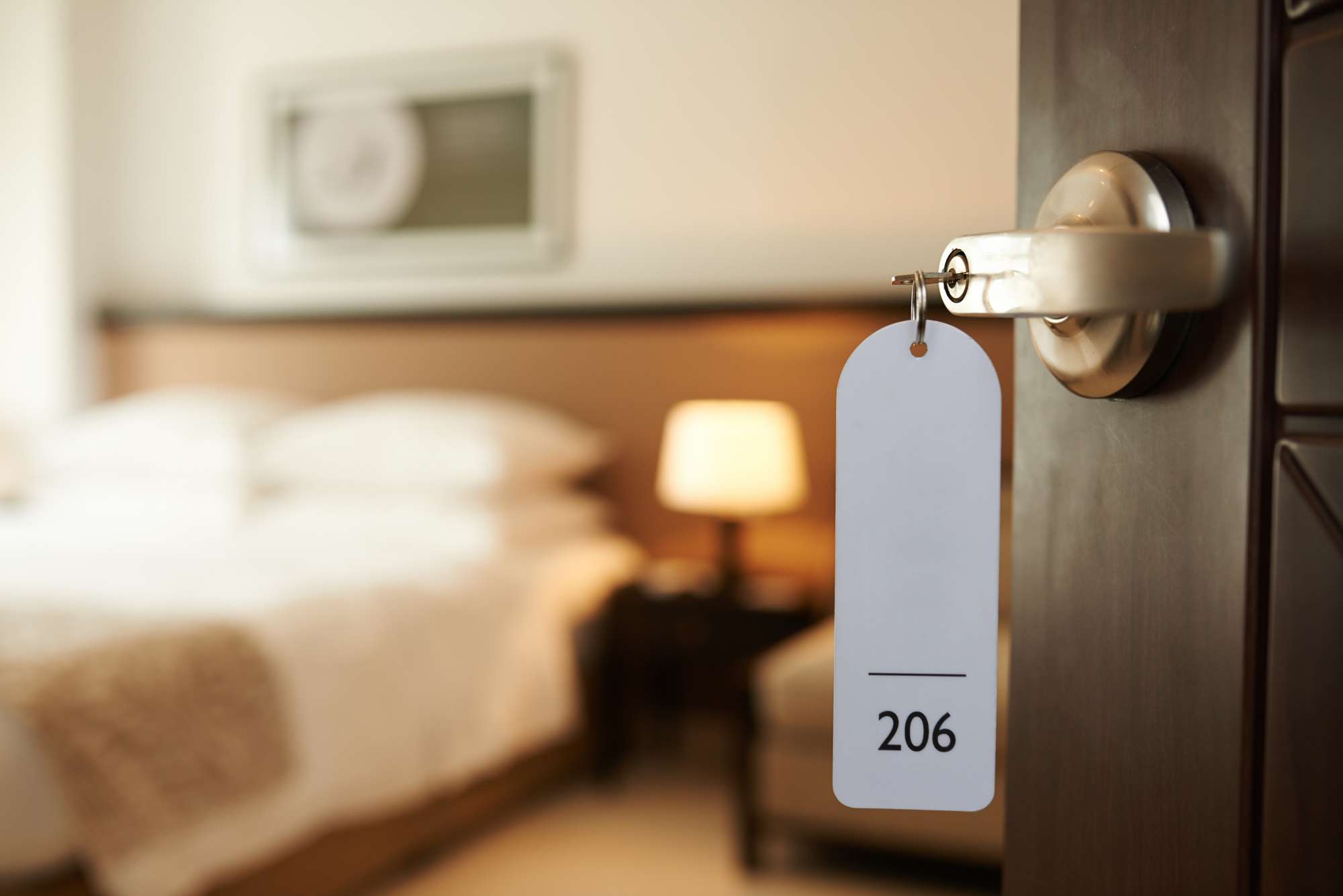
To effectively address how to avoid urban hotel security risks, one must first recognize that security is a spectrum of probability, not a binary state of existence. A property is never “safe” or “unsafe”; it is simply more or less prepared for specific categories of intrusion or disruption. The primary misunderstanding among urban travelers is the “Institutional Trust Fall”—the assumption that a high room rate or a global brand name serves as a proxy for rigorous security. In reality, large-scale hospitality operations often prioritize “frictionless hospitality,” which can lead to systemic weaknesses in access control and staff vigilance.
Oversimplification risks in this field are profound. Most advice focuses on the “physical room,” ignoring the “digital perimeter” and the “social exterior.” A guest might meticulously double-lock their door but then connect to an unencrypted Wi-Fi network or share their room number within earshot of a crowded elevator. True risk avoidance requires a holistic view of the stay as a series of interconnected zones: the sidewalk, the lobby, the elevator, the corridor, the room, and the digital cloud.
Furthermore, the “urban” element adds a layer of systemic complexity. A hotel in a dense city is subject to the external pressures of its neighborhood. If a property is located in a high-crime district, the lobby becomes a frontline for social friction. If it is located near a seat of government or a financial hub, it becomes a target for digital surveillance or political demonstration. Understanding these external variables is the first step in moving from a reactive to a proactive security posture.
Deep Contextual Background: The Evolution of Hotel Defense
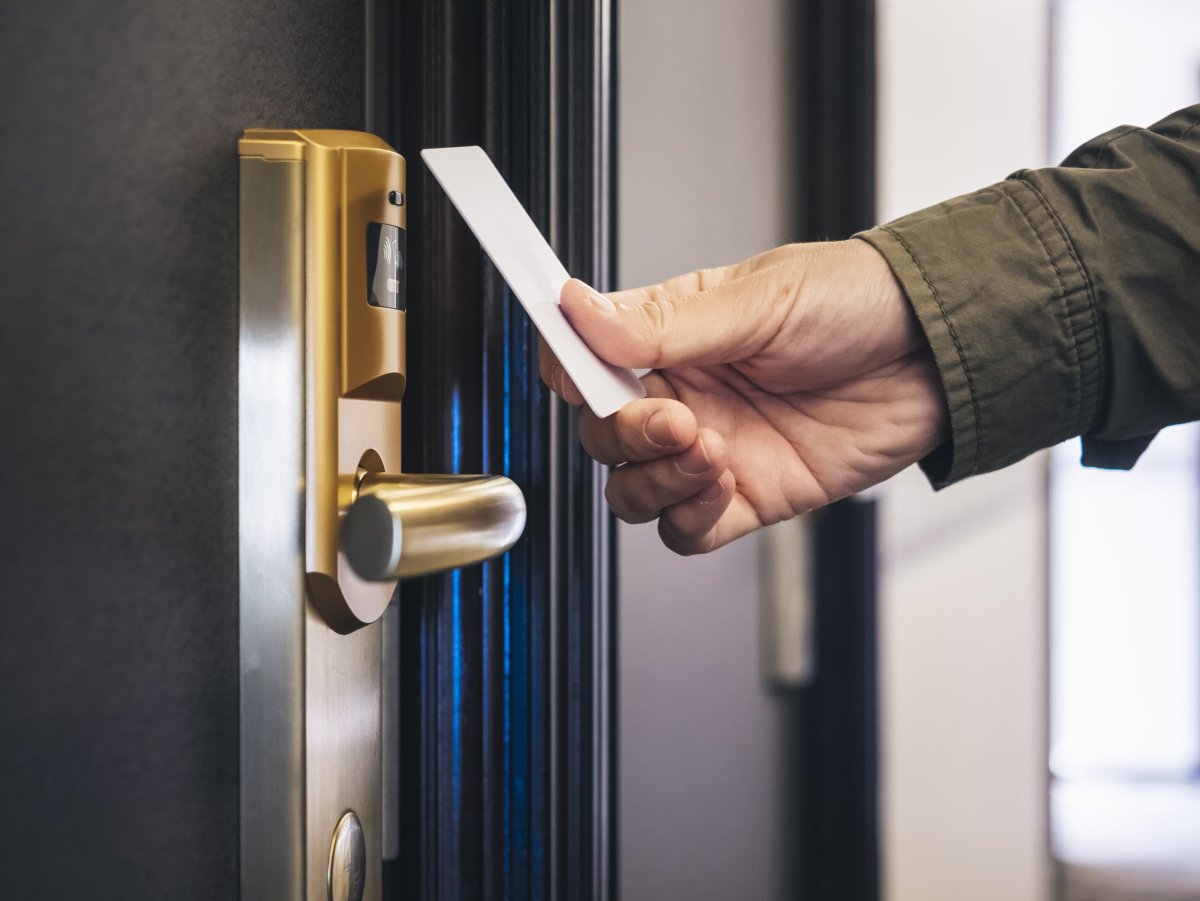
The concept of hotel security has evolved from the “Innkeeper’s Duty” of common law—primarily focused on protecting a traveler’s physical belongings from highwaymen—to a multi-dimensional discipline involving biometric access, cybersecurity, and counter-terrorism. It allowed hotels to “re-key” a room instantly, theoretically ending the era of the stolen master key. However, this also introduced the vulnerability of digital cloning and database breaches.
The current era, often termed the “Post-Transparency Era,” is defined by the tension between guest privacy and the need for surveillance. Modern urban hotels are equipped with extensive CCTV networks and AI-driven behavioral analytics, yet they are simultaneously more vulnerable to remote exploits. This historical shift means that the modern traveler must be as concerned with who is watching their data as they are with who is watching their door.
Conceptual Frameworks and Mental Models
Navigating high-density hospitality safely requires more than a checklist; it requires a way of thinking. These three frameworks provide a baseline for situational awareness:
-
The Layered Defense Model (The Onion): This model views security as a series of concentric circles. The outermost layer is the neighborhood; the innermost is the hotel safe or the encrypted laptop.
-
The “Target Hardening” Philosophy: This is a psychological framework. Crime is often opportunistic. By demonstrating visible signs of vigilance—using an extra door jam, declining a ground-floor room, or practicing “low-profile” movement—a guest makes themselves a “harder” and less attractive target than the distracted traveler in the next room.
-
The OODA Loop (Observe, Orient, Decide, Act): Originally a military framework, this is used to manage high-pressure situations. In a hotel, it means constantly observing the exits, orienting oneself to the fire map, deciding on a path of escape, and being ready to act before panic sets in during an emergency.
Key Categories of Risk and Defensive Trade-offs
Realistic decision logic involves acknowledging that total security is exhausting. One must choose their “battles.” For a business traveler with sensitive data, digital hygiene is the priority. For a solo traveler in a new city, physical access control and social vigilance take precedence.
Detailed Real-World Scenarios
1: The “Distraction” Lobby Theft
-
Constraint: A traveler arrives at a busy Manhattan hotel during peak check-in.
-
Decision: The traveler leaves their laptop bag on the floor while arguing with the clerk about a reservation.
-
Failure Mode: A “non-guest” loitering in the lobby uses the crowd as cover to swap the bag for an empty one.
-
Second-Order Effect: The loss of the hardware is secondary to the potential data breach of the unencrypted hard drive, leading to a corporate-wide security audit.
2: The Digital “Evil Twin” Network
-
Constraint: A traveler in San Francisco needs to send a sensitive document but the room’s Wi-Fi is weak.
-
Decision: They connect to a strong, open signal named “Hotel_Guest_HighSpeed.”
-
Failure Mode: The network is a “Man-in-the-Middle” (MitM) trap set by a person in a nearby room.
-
Second-Order Effect: All session cookies and login credentials entered during that hour are harvested, allowing the attacker to bypass two-factor authentication later that evening.
Scenario 3: The Staff Impersonation
-
Constraint: A knock at the door at 11:00 PM; a voice claims to be “Maintenance” checking a leak.
-
Decision: The guest, wanting to be helpful and avoid a flood, opens the door immediately.
-
Failure Mode: The “staff member” is an intruder who noted the guest’s expensive watch in the bar earlier.
-
Second-Order Effect: A physical confrontation occurs in a confined space where the guest has no retreat path.
Planning, Cost, and Resource Dynamics
Reducing risk is not free; it requires an investment of time, money, and cognitive energy.
-
Direct Costs: Purchasing portable travel locks, VPN subscriptions, and Faraday bags.
-
Indirect Costs: The higher room rate of a property with “Restricted Elevator Access” (key-card required for every floor) versus a budget hotel with open stairwells.
-
Opportunity Cost: The time spent “sweeping” a room for cameras or walking the fire exit route could be spent working or resting.
Tools, Strategies, and Support Systems
Implementing a robust defense requires a combination of hardware and behavior.
-
The “Third-to-Sixth” Floor Rule: Avoid the ground floor (vulnerable to street-level intrusion) and floors above the reach of fire department ladders.
-
Visual Deterrents: Leaving the “Do Not Disturb” sign out even when not in the room, and keeping a light or the television on to simulate occupancy.
-
The “Desk-Verify” Habit: Never opening the door to anyone without first calling the front desk to confirm they sent a staff member to that specific room.
-
Hardware Enclaves: Utilizing travel routers to create a private network, ensuring that the hotel’s smart TVs and other guests cannot “see” your devices.
-
FARADAY Shielding: Storing spare key cards and passports in signal-blocking sleeves to prevent RFID skimming.
-
Situational Entry: Keeping one hand free when entering the hotel and the room; never being “buried” in a phone while navigating corridors.
Risk Landscape and Failure Modes
The most dangerous failure mode in urban hotel security is “Normalization of Deviance.” This occurs when a guest or staff member repeatedly ignores a security protocol (like propping a side door open for a smoke break) because “nothing has happened yet.” In a hotel, this usually manifests as a front desk clerk failing to ask for ID during a key-replacement request.
Governance, Maintenance, and Long-Term Adaptation
For the professional traveler, safety is a process, not a product.
-
Post-Stay Debrief: Identifying any “near misses.” Did someone follow you into the elevator? Was the room door difficult to latch?
-
Quarterly Tech Audit: Updating VPN software, changing master passwords, and checking the physical integrity of travel locks.
-
Adjustment Triggers: If a city’s “civil unrest” index rises, the traveler must pivot from “boutique hotels” (lower security) to “international business hubs” (higher-grade perimeter security).
-
Layered Checklist:
-
[ ] Is the door’s automatic closer functional?
-
[ ] Does the “peep-hole” have a cover or obstruction?
-
[ ] Are the windows and balcony doors fully latched?
-
[ ] Has the digital connection been tunneled through a VPN?
-
Measurement, Tracking, and Evaluation
-
Leading Indicator: The number of times a guest has to “re-orient” to an exit; a high frequency indicates good situational awareness.
-
Lagging Indicator: The “Theft or Breach Incidence Rate”—ideally zero.
-
Qualitative Signal: “Confidence Score”—how much the traveler’s safety concerns impacted their ability to perform their urban mission.
Common Misconceptions and Oversimplifications
-
Myth: “High floors are safer.” Correction: High floors are safer from intruders but much more dangerous in the event of a fire.
-
Myth: “The safe in the room is for valuables.” Correction: The safe is a deterrent for “honest” staff; it is not a defense against a professional thief or a sophisticated override.
-
Myth: “Key cards are encrypted.” Correction: Many use older RFID or magnetic tech that can be cloned from several feet away.
-
Myth: “Hotel staff are vetted.” Correction: High turnover in urban hospitality often leads to gaps in background checks for temporary or third-party workers.
-
Myth: “I’m safe if I stay in a global brand.” Correction: Brand standards vary wildly by franchise owner; the “logo” does not guarantee the “lock.”
-
Myth: “Digital risk is only for ‘important’ people.” Correction: Identity theft is a volume game; anyone with a credit card is a target.
Ethical and Practical Considerations
Aggressive security measures (like filming staff or being accusatory) can create a hostile environment that actually decreases your safety by alienating the people who are your first line of defense. Practically, the most effective security is “invisible”—it is a set of habits that protects you without disrupting the social flow of the hotel. Understanding how to avoid urban hotel security risks should not turn a trip into an exercise in paranoia; it should provide the confidence to engage with the city freely.
Conclusion: The Adaptive Traveler
The urban hotel is a microcosm of the city itself—vibrant, unpredictable, and layered with hidden risks. To navigate it successfully, the traveler must abandon the illusion of a “guaranteed safe” environment and instead embrace a philosophy of adaptive resilience.
By applying a structured framework to every stay—from the initial floor choice to the final digital disconnect—the traveler moves from a position of vulnerability to one of command. As urban environments continue to evolve and threats become increasingly hybridized between the physical and the digital, the ability to think critically about one’s surroundings remains the most powerful security tool available.