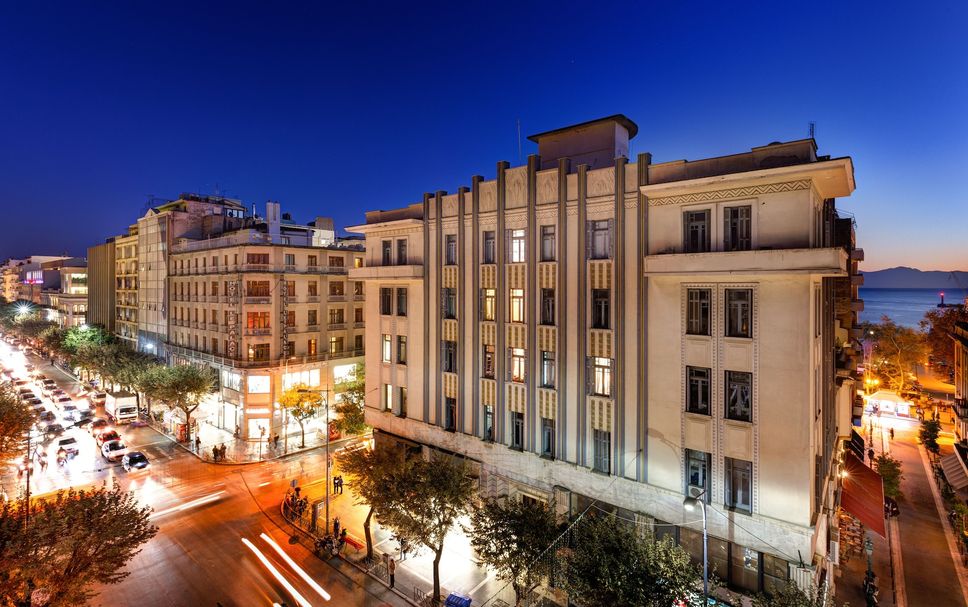
Compare urban hotels: A strategic operational audit for high-performance stays
The modern metropolitan hotel is no longer a passive container for travelers; it is an active logistical node within the broader urban infrastructure. As cities densify, the complexity of these assets has increased, often outpacing the ability of the average traveler or developer to accurately assess their viability. A hotel in a dense urban core functions less like a house and more like a vertical municipality. It must reconcile the chaotic, unmanageable nature of the streetscape with the rigid, high-expectations environment of the guest interior.
When observers attempt to evaluate these spaces, they often default to surface-level metrics: price, aesthetic styling, or proximity to landmarks. These are insufficient. A truly effective assessment of a metropolitan asset requires a forensic approach. One must account for the invisible systems—vertical circulation, acoustic isolation, service-to-room ratios, and the resilience of the local supply chain—that determine whether a property functions as an integrated, frictionless system or a source of operational frustration.
Consequently, when professional entities compare urban hotels, they are not merely looking at comfort. They are analyzing “operational throughput.” They are investigating the building’s ability to manage its own internal density. A property that is aesthetically pleasing but fails to resolve the mechanical tensions of high-rise living will consistently underperform. To achieve long-term value, both in terms of stay satisfaction and capital investment, one must shift from an aesthetic gaze to an analytical one.
Understanding “compare urban hotels”
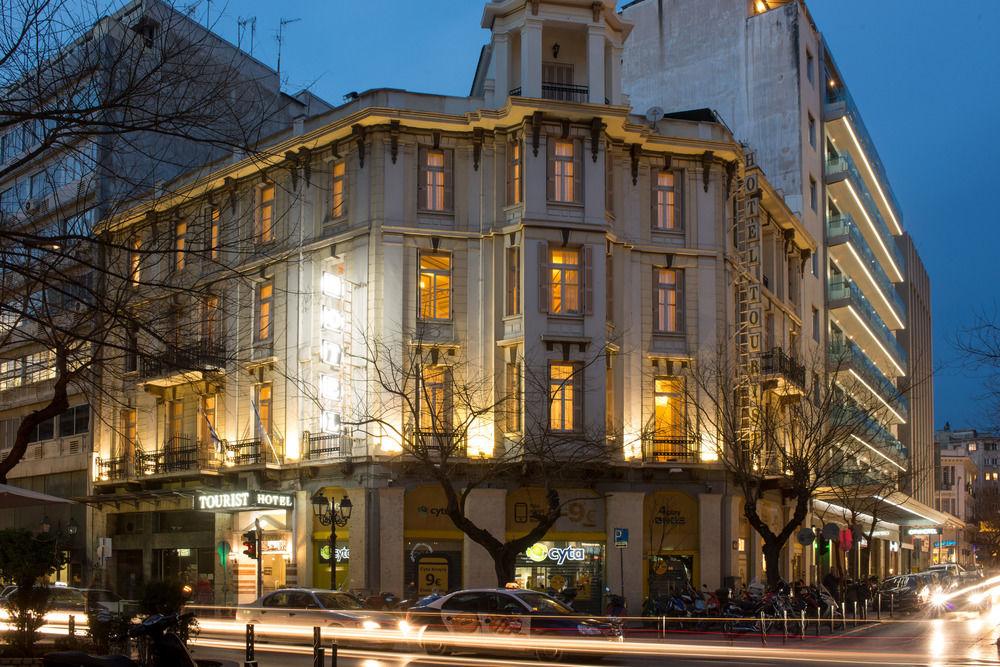
To correctly compare urban hotels, one must strip away the marketing layer and evaluate the property as a piece of infrastructure. The common misunderstanding is that “luxury” is an additive process—that by adding more marble, more concierge staff, or higher-end linens, you improve the hotel. This is an oversimplification that ignores the fundamental mechanics of the urban building. A hotel with gold-plated faucets and a 20-minute elevator wait time is, operationally speaking, a failure.
The primary difficulty when you compare urban hotels is the lack of standardized data regarding “friction.” Friction, in this context, is the sum of all obstacles between the guest and their objectives—transit, check-in, noise, service delays, or infrastructure failure. The best properties are those that have engineered this friction out of the system. They are the buildings where the transition from the city street to the private sanctuary feels invisible.
Oversimplification leads to disastrous results. Many observers assume that a high-profile location is the primary driver of value. However, an urban core location can actually be a significant liability if the building’s acoustic envelope is not robust. A hotel on a premier thoroughfare that transmits the sound of emergency sirens into the guest room is not a premier hotel; it is an ill-conceived asset. Therefore, a meaningful comparison must weigh location not just by its proximity to attractions, but by its exposure to operational and environmental stressors.
Deep Contextual Background: The Evolution of the Vertical Node
Historically, the urban hotel was horizontal. It relied on vast footprints, grand ballrooms, and distinct separation from the street. The shift to the vertical node, occurring primarily in the mid-20th century, was driven by the escalation of urban real estate values. As land became a premium commodity, hospitality assets were forced to go up. This verticality changed everything.
The challenge of the vertical node is the “service spine.” In an older, horizontal hotel, service staff moved through corridors that were easily accessible. In a vertical tower, every room service tray, every change of linens, and every guest request must move through a limited number of elevator shafts. This bottleneck transformed hospitality into a logistical optimization problem. The modern, successful urban hotel is the one that best manages the physics of its vertical circulation. We are now in a period where technology—predictive elevator dispatch, automated building management systems, and high-bandwidth guest connectivity—is being retrofitted into these rigid concrete skeletons. The buildings that have adapted best are those that treat their infrastructure as a dynamic, rather than static, component of the guest experience.
Conceptual Frameworks and Mental Models
To evaluate urban assets with technical rigor, consider the following models:
-
The Frictional Throughput Model: This framework posits that a hotel’s performance is inversely proportional to the time taken to perform any guest action. From the moment the door opens to the moment the guest is inside their room, every second of friction is a deduction from the asset’s value.
-
The Atmospheric Buffer Quotient: This evaluates the property’s ability to “filter” the city. It measures how effectively the building envelope (windows, walls, HVAC) cancels the external urban environment. A high quotient property feels like a library; a low quotient property feels like a lobby.
-
The Supply Chain Redundancy Index: This is a crucial, often overlooked metric. It measures a property’s dependence on external, third-party logistics. Does the property have its own storage for dry goods, spare parts, and laundry, or is it reliant on a fragile “just-in-time” delivery schedule through urban traffic?
When you compare urban hotels, applying these frameworks allows for a consistent, data-driven analysis that avoids the emotional bias inherent in traditional travel assessment.
Key Categories or Variations of Urban Assets
To structure the comparison, classify assets by their structural and operational archetypes:
| Category | Typical Profile | Primary Operational Constraint | Key Success Factor |
| Integrated Node | Part of a larger tower | Elevator/Service capacity | Integrated lobby flow |
| Boutique Infill | Renovated historic building | Structural/Piping obsolescence | Unique spatial narrative |
| Vertical Resort | High-density self-contained | Energy/Waste management | High-end on-site amenities |
| Extended-Stay Core | Modular/Efficient | Service-to-guest ratio | Long-term operational cost |
Realistic decision logic dictates that the “best” category is entirely dependent on the specific requirements of the stay. If the objective is deep, high-focus work, a Vertical Resort with high-performance soundproofing is the only valid choice. If the objective is rapid-fire urban meetings, an Integrated Node with direct transit access is non-negotiable.
Detailed Real-World Scenarios
Scenario 1: The “Logistics Collapse”
A major city experiences a gridlock event, rendering surface-level delivery impossible for 48 hours.
-
Decision: The hotel with on-site, deep-inventory storage maintains a 5-star experience, while the hotel dependent on daily deliveries runs out of fresh linens and essential supplies.
-
Failure Mode: Relying on regional distribution centers in a city environment creates a single point of failure.
Scenario 2: The “Acoustic Breach” in Historic Infill
A historic building is converted into a high-end property, but the original masonry does not account for modern urban vibration.
-
Constraint: Light rail transit runs beneath the building, causing structural humming.
-
Decision: The property installs active dampening technology.
-
Second-Order Effect: The CAPEX for this installation is massive, forcing the hotel to raise ADR (Average Daily Rate) significantly, which may push it out of its target demographic.
Planning, Cost, and Resource Dynamics
The “Total Cost of Presence” (TCOP) is a metric that serious evaluators use to compare urban hotels. It includes the direct costs (room rate, taxes) and indirect costs (transportation time to meetings, lost productivity from poor sleep, costs of eating out due to inadequate F&B).
-
Direct Costs: Room rate, resort fees, local taxes.
-
Indirect Costs: Transit efficiency, time-cost of inefficient service, environmental impact of poor climate control.
-
Variable Costs: The “Hidden Logistics Tax”—higher prices on food and services caused by the difficulty of supplying the property.
| Cost Variable | Financial Impact | Variability |
| Vertical Circulation | High | Low (Fixed) |
| Urban Logistics | Moderate | High (Volume-based) |
| Infrastructure/HVAC | Very High | Fixed |
| Labor/Staffing | Moderate | Scalable |
Tools, Strategies, and Support Systems
-
Acoustic Mapping: Utilizing decibel-tracking tools to audit a room’s silence before committing to a long-term stay.
-
Predictive Infrastructure Auditing: Engaging with the property’s maintenance history (if available) to identify patterns of elevator or plumbing failure.
-
Local Node Verification: Checking the property’s relationship with local municipal services—hotels that are well-integrated with city services tend to have fewer operational disruptions.
-
The “Last-Mile” Access Audit: Mapping the exact path from the nearest transit hub to the hotel lobby; is it clear, safe, and efficient?
Risk Landscape and Failure Modes
There is a distinct taxonomy of failure modes in urban assets:
-
The “Vanity Architecture” Trap: A property focused on a grand, open-air lobby that becomes an energy sink, requiring constant, expensive HVAC operation and creating a high-noise environment.
-
Service-Guest Proximity: When service staff share elevators with guests, service is delayed, and the “luxury illusion” is broken.
-
Regulatory Drift: Buildings that fail to comply with evolving city codes (fire, sustainability) are often subjected to “rolling renovations,” causing massive guest disruption.
Governance, Maintenance, and Long-Term Adaptation
To effectively manage or evaluate these assets, governance must be treated as a continuous loop.
-
Audit Cycles: Perform an “Operational Efficacy Audit” every three years. Are the original systems still adequate?
-
Adjustment Triggers: If a property has not renovated its “soft goods” (carpets, drapery) within a five-year cycle in a high-traffic urban market, it is likely that the infrastructure is also being neglected.
-
The Layered Checklist:
-
[ ] Verify the status of the building’s vertical service core.
-
[ ] Audit the acoustic envelope (door seals, window ratings).
-
[ ] Confirm the property’s waste management and utility autonomy.
-
Measurement, Tracking, and Evaluation
When you compare urban hotels, rely on objective signals:
-
Leading Indicators: “Circulation Velocity.” How long does it take for a housekeeping cart or a service tray to move from the service hub to the room? High velocity indicates a well-planned service core.
-
Lagging Indicators: “Revenue per Available Vertical Foot.” This measures the profitability of the asset relative to the massive cost of vertical construction and maintenance.
-
Qualitative Signal: “The Acoustic Baseline.” In the urban context, silence is the ultimate measure of construction quality.
Common Misconceptions and Oversimplifications
-
Myth: “Newer hotels are always superior.” Correction: Many new developments are “fast-tracked” with inferior acoustic materials and cheaper MEP (mechanical, electrical, plumbing) systems. Older, renovated properties with thick masonry often outperform them.
-
Myth: “High-rise equals high-luxury.” Correction: High-rise equals high-logistics. The higher the hotel, the more it is subject to the laws of vertical physics, which favor efficiency over comfort.
-
Myth: “Proximity to the center is always better.” Correction: Proximity to the center increases the “Noise/Pollution Load.” The best hotels are often a strategic distance from the center, providing a buffer.
Ethical, Practical, and Contextual Considerations
The urban hotel is part of the social and economic fabric of the city. The most responsible assets are those that do not operate as gated communities. They engage with the local economy, provide public-accessible spaces, and mitigate their environmental footprint. When you compare urban hotels, consider their impact on the neighborhood. A property that consumes resources without giving back to the local urban ecosystem is, in the long term, an extractive asset that will eventually face social and regulatory friction.
Conclusion
The pursuit of the best urban hotel options is not a search for perfection, but a search for equilibrium. It requires the traveler or the asset manager to look past the surface and evaluate the property as a complex, self-contained organism. By applying a rigorous, audit-based approach—prioritizing logistical resilience, operational consistency, and ethical stewardship—one can identify experiences that are not only efficient but fundamentally sound. True excellence in this space is found not in the price of the room, but in the precision with which the property manages the immense, invisible effort required to sustain an experience of sanctuary in the heart of the city.